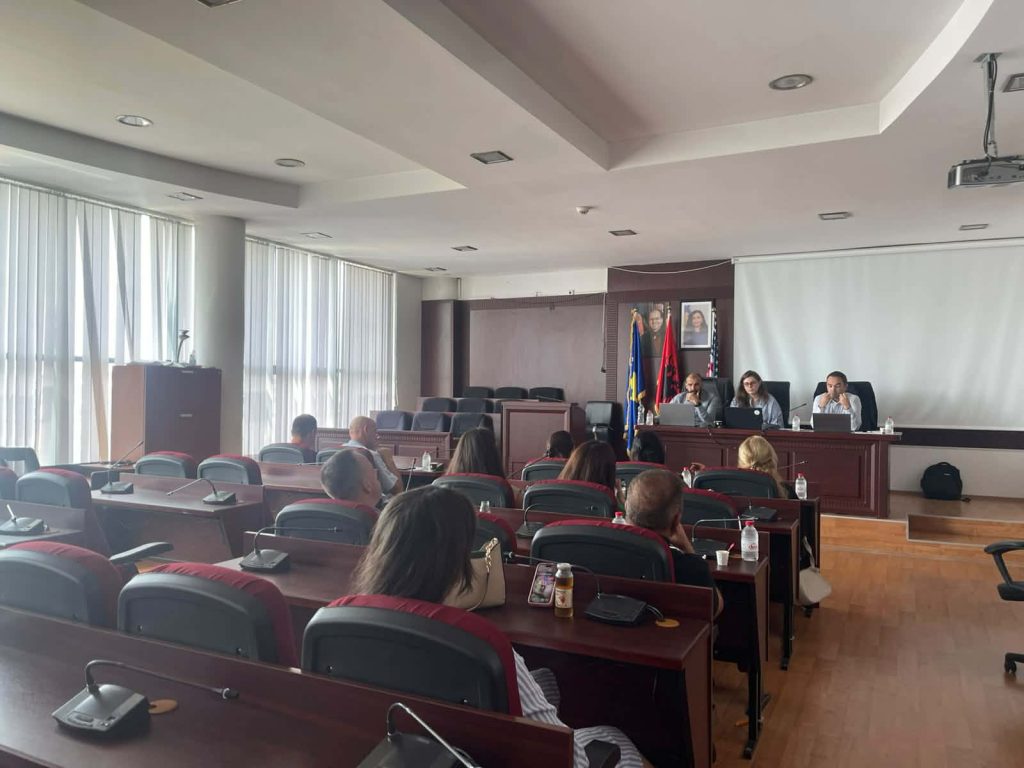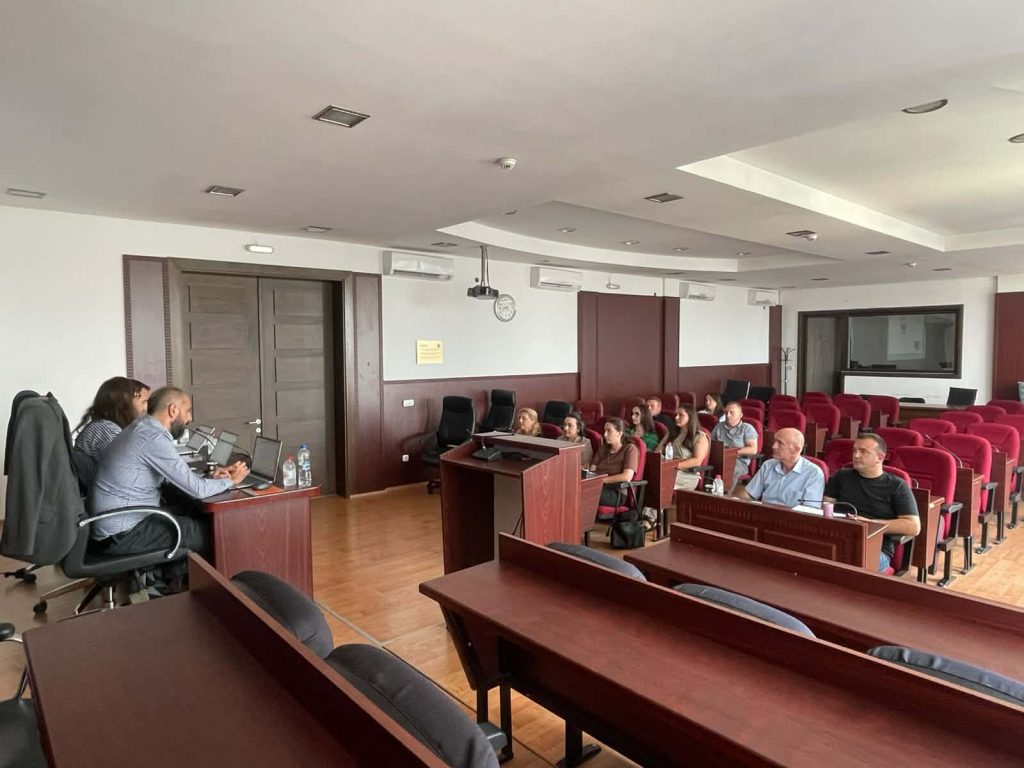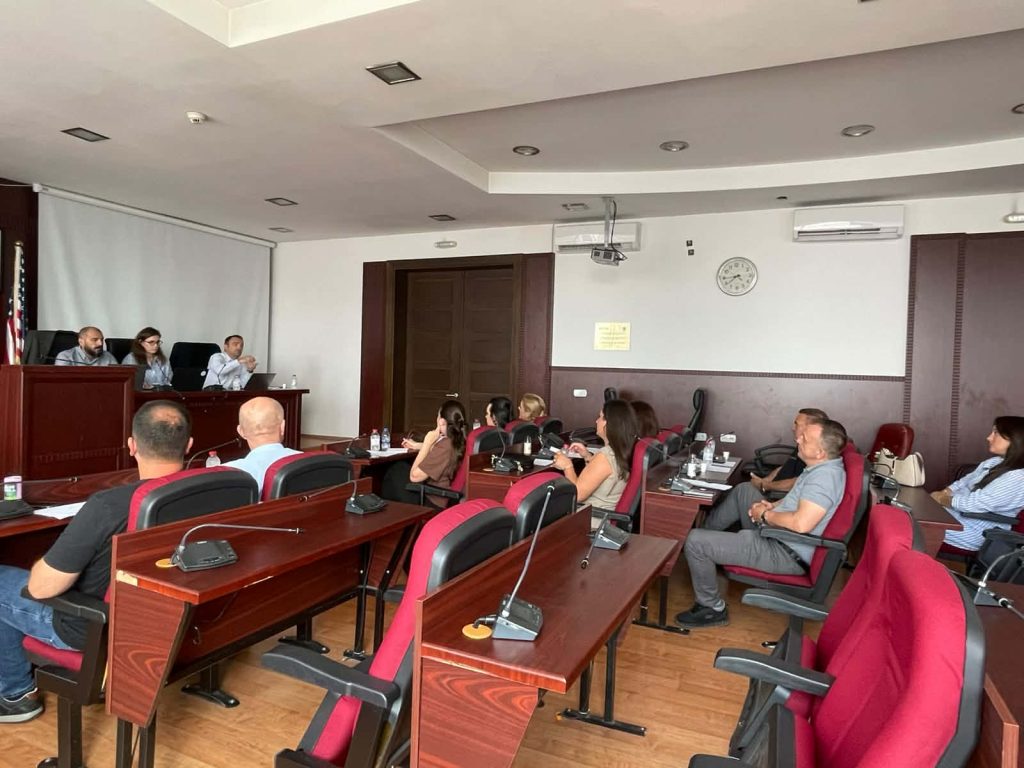
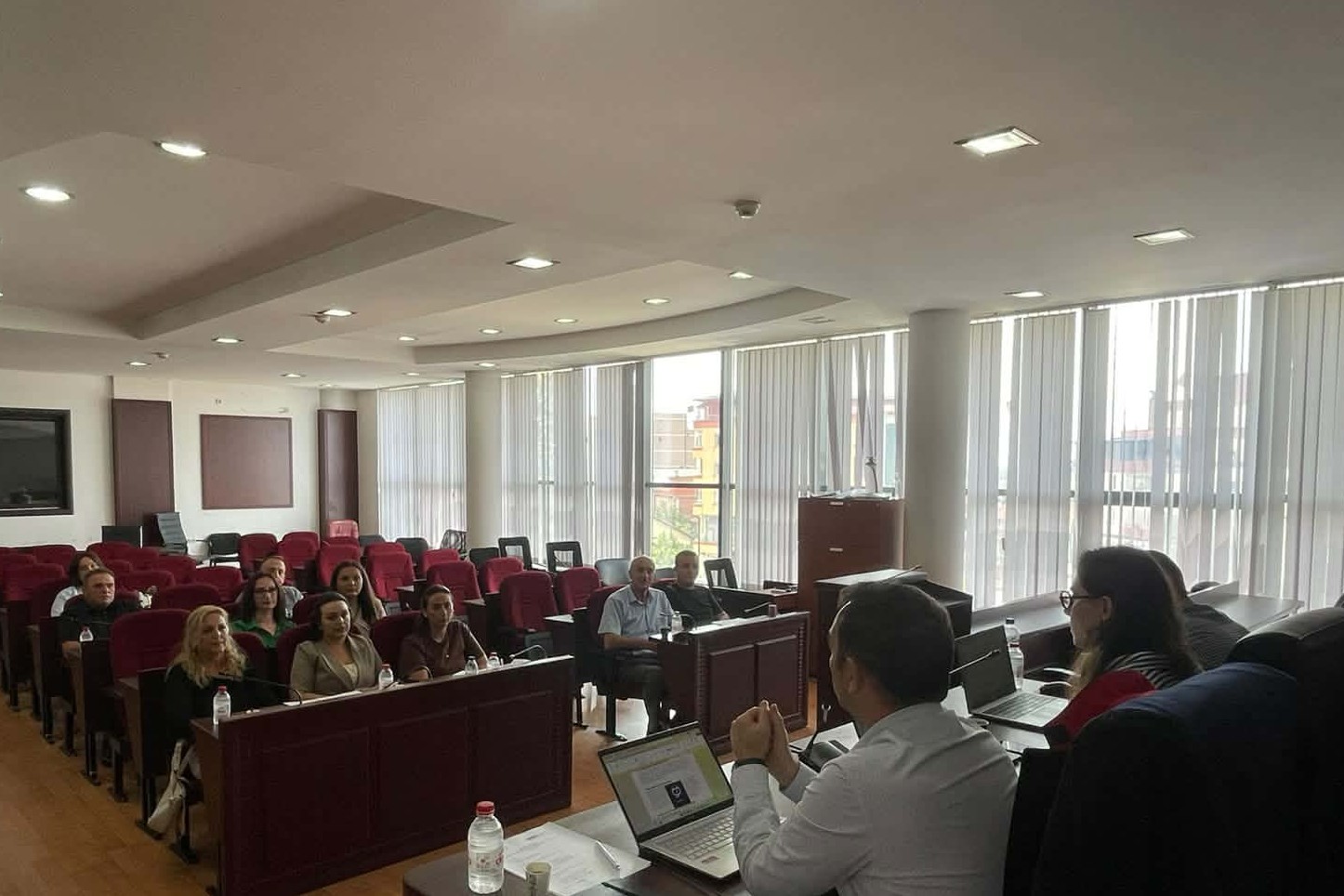
Improving the functioning of municipal assemblies, strengthening the role of assembly members, and identifying citizens’ priorities were the focus of the advocacy session organized by the Musine Kokalari Institute for Social Policy with the members of the Municipal Assembly of Istog.
The activity was held in Istog and brought together members of the Municipal Assembly, including the Chairperson of the Municipal Assembly and representatives of non-majority communities. It was carried out within the framework of the institute’s activities aimed at strengthening citizen representation and advancing inclusive local governance, creating a space for reflection on the assembly members’ experiences to date, identifying challenges in exercising their mandates, and discussing opportunities for improving the functioning of the Municipal Assembly and the representation of citizens.
The session was facilitated by Fisnik Rexhepi and Senad Šabović, who addressed the legal aspects of the functioning of municipal assemblies, the competencies and responsibilities of assembly members, as well as their role in overseeing the municipal executive and representing the interests of citizens.
During the discussions, participants shared their experiences related to the exercise of their mandates and highlighted a number of challenges affecting the effective functioning of municipal assemblies. In particular, the need to improve the Law on Local Self-Government and the bylaws regulating the functioning of municipal assemblies was discussed, emphasizing that some current provisions limit opportunities for more substantial reforms and improvements to internal procedures.
Participants also discussed the importance of cooperation among political groups within the assembly, assessing that addressing citizens’ needs requires continuous dialogue and coordination beyond political differences. It was emphasized that, regardless of whether they are in the governing majority or the opposition, assembly members play an important role in raising issues of public interest and overseeing the implementation of municipal policies.
Part of the discussion was dedicated to the functioning of the Committee for Communities, where it was assessed that this mechanism plays an important role in representing non-majority communities, while opportunities were identified for further strengthening the participation and cooperation of all its members.
As part of the session, assembly members identified a number of priorities requiring increased attention in the upcoming period. Among the most emphasized issues were the improvement of local infrastructure, including public lighting, sidewalks, and roads in rural areas, increasing safety in the vicinity of schools, the construction of recreational and sports facilities for youth and children, as well as the expansion of kindergarten capacities.
Participants also discussed the need for investments in public transportation for students, improving accessibility for persons with disabilities in public institutions, addressing the problem of stray dogs, constructing bicycle paths, and advancing irrigation and sewage infrastructure in areas where these services are still lacking.
Special attention was also devoted to the safety and well-being of children, including the need to improve school infrastructure, digitalize educational processes, and address concerns related to the sale of inappropriate products in the vicinity of educational institutions. Through this activity, the Musine Kokalari Institute for Social Policy continues to contribute to strengthening dialogue among elected representatives and promoting local governance that is more transparent, inclusive, and responsive to the needs of citizens.
This activity was implemented within the framework of the project “Promoting Political Dialogue on Interethnic and Social Cohesion”, with the support of the National Endowment for Democracy (NED).