The lack of trade unions in certain sectors, weak union organization overall, failure to enforce labor laws, and political arbitrariness remain some of the main challenges to workers’ rights in the region.
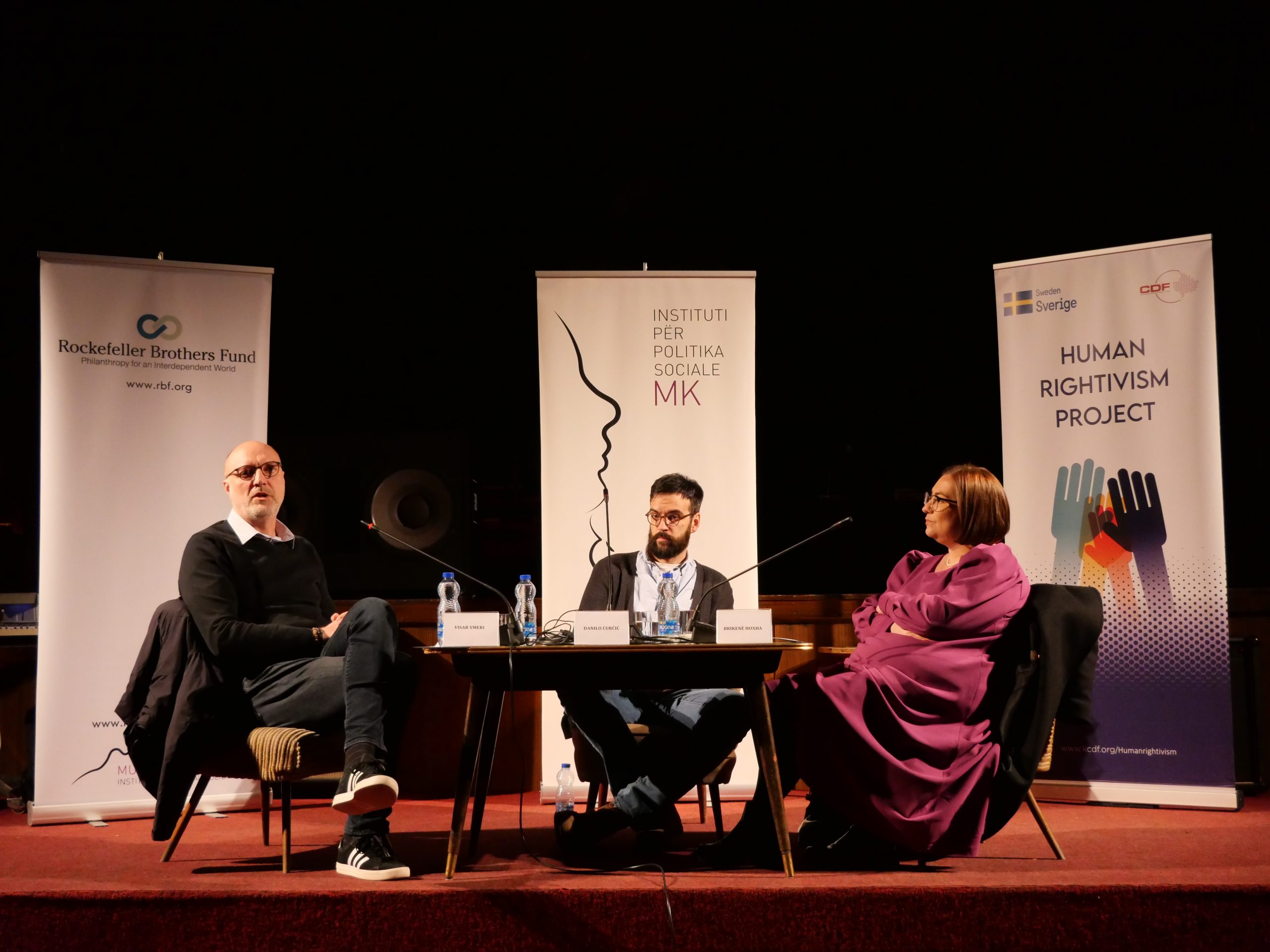
This was the joint conclusion of the public discussion on labor rights in Kosovo and Serbia, organized on Tuesday in Prishtina by the Musine Kokalari Institute for Social Policies.
“The problems regarding workers’ rights are similar between us, which is why the region should be treated as a whole. In Serbia, the state has established flexible rules to favor investments while turning a blind eye to workers’ rights, and often the Labor Law is not even enforced,” stated Danilo Ćurčić from A11 Initiative for Economic and Social Rights in Belgrade.
For Brikena Hoxha, Executive Director of the Kosovo Stability Initiative (IKS), Kosovo has set minimal standards regarding labor rights. “From the harmonization of labor legislation with European directives to the lack of workplace safety, as well as issues with social security and the minimum wage, Kosovo remains one of the most problematic countries in the region concerning workers’ rights,” she said.
The panelists also highlighted new challenges related to the migration of local workers and the lack of protection of the rights of workers, mainly coming from the East. “Weak trade unions, worker migration, the informal economy, and the lack of protective infrastructure for young workers coming from abroad remain significant current issues,” concluded Visar Ymeri, Executive Director of ISP Musine Kokalari, who moderated this discussion.
The purpose of organizing this discussion was, besides comparing the situation of workers’ rights across different economic realities in the neighboring region, to exchange experiences of the respective societies and countries regarding the challenges faced by workers on both sides of the border. It also aimed to address the possibilities for cross-border social cooperation among civil society and trade unions to increase the level of solidarity and thereby strengthen the voice and opportunity for greater social justice, protection, and advancement of working conditions, as well as greater social equality. Regional cooperation in protecting workers, the environment, justice, and social cohesion is essential.
The discussion, aimed at identifying common problems and opportunities to improve workers’ rights, was supported by the Swedish Embassy, Community Development Fund (CDF), and Rockefeller Brothers Fund.
March 28, 2023