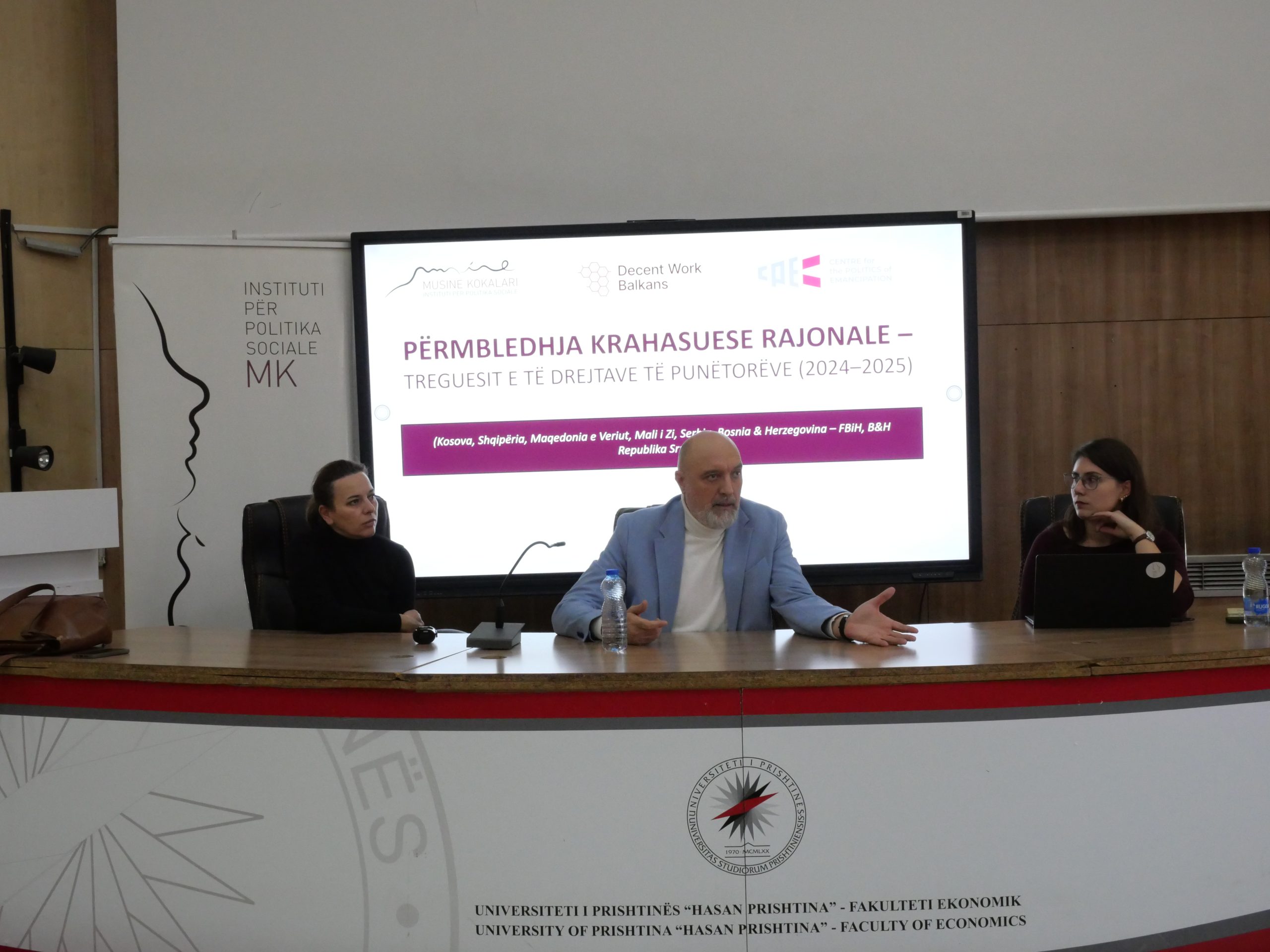
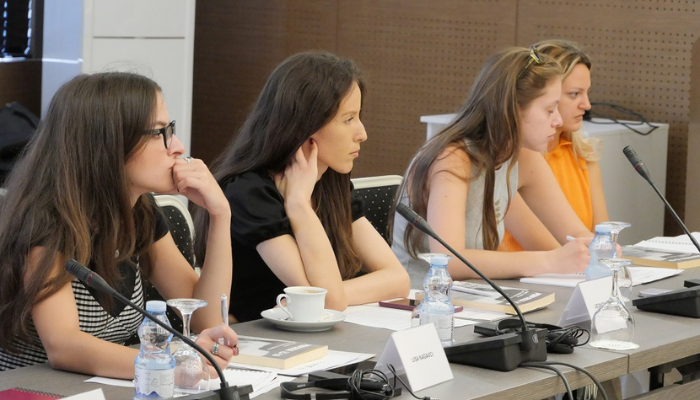
The development and strengthening of the role of the education trade union was the focus of a consultative meeting between representatives of the Institute for Social Policy Musine Kokalari and the United Education, Science and Culture Union (SBAShK). The meeting was attended by Visar Ymeri,
Pressure from employers and widespread practices of hiring workers outside of formal employment contracts makes union organizing in the Serbian fast food industry practically impossible. This is the story of one worker who defied those odds. Author: Igor Išpanović An insignificant percentage of workers in
According to the available data of the Center for Emancipation Policies (CPE) for 2024, in the textile, clothing, leather and footwear sector, according to official data, 60.725 people were employed[1]. The legal minimum net salary was EUR 407, and the average salary in the textile
Even though the need for pension insurance in Serbia was established over one hundred years ago, today, over 120,000 citizens over the age of 65 do not receive a single form of pension. The institution of social pensions for the poorest is long-established around the
The Institute for Social Policy Musine Kokalari develops publications, scientific research and public policy analyses. The Institute’s work is based on empirical data, quantitative and qualitative analyses, as well as an interdisciplinary approach, with the aim of producing reliable knowledge that aids a deeper understanding of social and institutional processes.
You can contribute to the Institute in various ways, whether financially, with tools or services. Your involvement helps ensure the sustainability of our projects and strengthens our efforts to create lasting change.
You can contribute to the Institute in various ways, whether financially, with tools or services. Your involvement helps ensure the sustainability of our projects and strengthens our efforts to create lasting change.