Improving access to services, expanding preschool care capacities, strengthening citizens’ participation in decision-making processes, and increasing oversight of municipal policies were highlighted as some of the key priorities for advancing the social and institutional inclusion of Ashkali, Roma, and Egyptian communities in the municipalities of Fushë Kosovo and Lipjan.
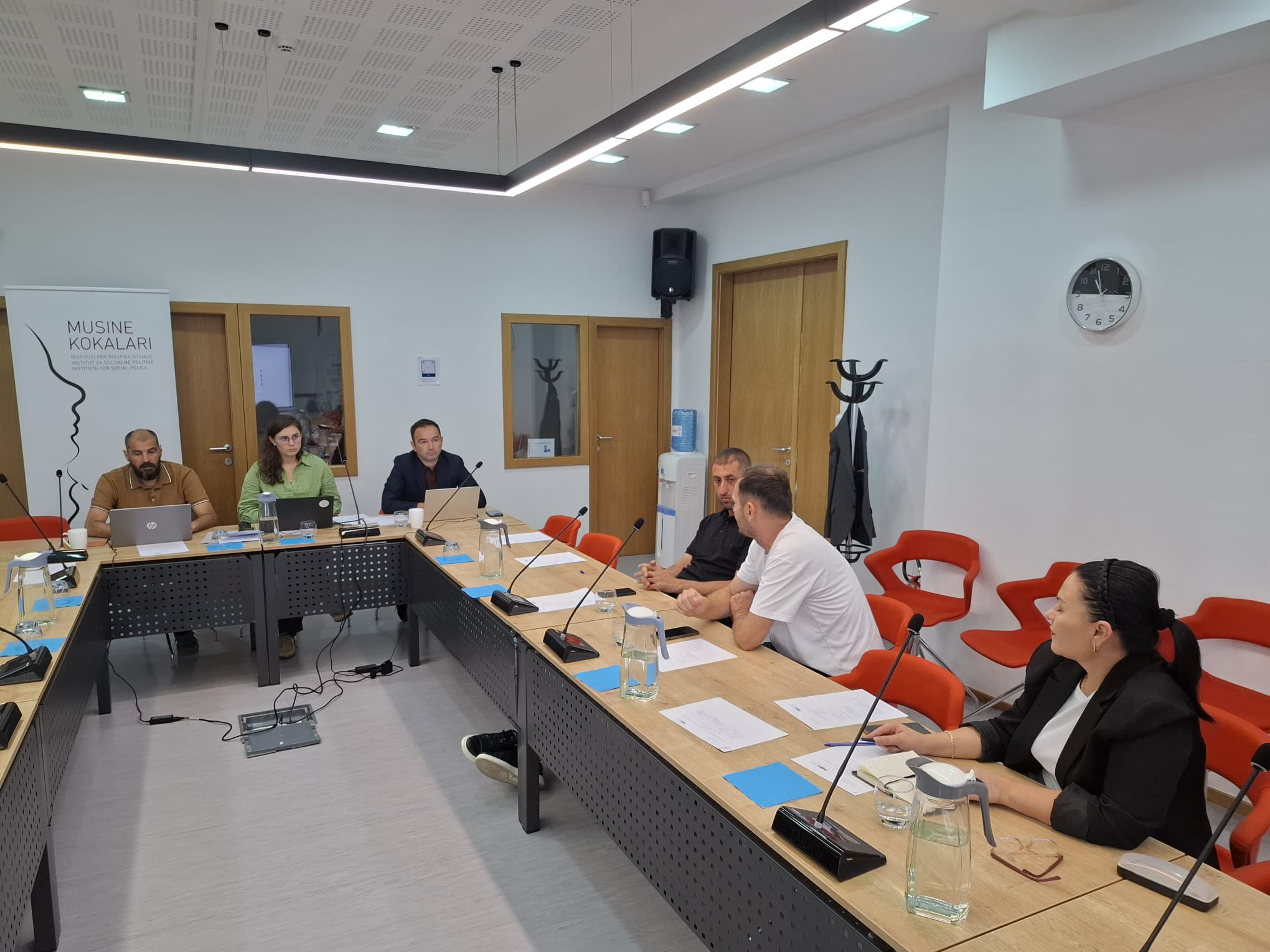
These priorities were identified during the consultative meeting with assembly members from the municipalities of Fushë Kosovo and Lipjan, organized by the Musine Kokalari Institute for Social Policy (IPSMK) within the framework of the project supported by the National Endowment for Democracy (NED). The meeting aimed to identify the challenges and needs of Ashkali, Roma, and Egyptian communities, as well as to define concrete actions for advancing their social and institutional inclusion. Although invited, representatives of the Municipality of Obiliq did not participate.
During the discussions, participants emphasized the necessity of addressing the challenges faced by these communities at the local level, particularly regarding access to public and institutional services, improving living conditions for families, and creating better opportunities for education, employment, and participation in public life. At the same time, the importance of closer cooperation between municipal institutions and civil society organizations in the development, implementation, and monitoring of policies for communities was highlighted.
As part of the meeting, findings from consultations conducted with citizens were also presented, highlighting challenges in the areas of education, including discrimination in schools, employment and economic development, access to services and support programs, civic participation and institutional representation, as well as interethnic relations and social inclusion.
Representatives of the Municipality of Lipjan emphasized difficulties in accessing services for certain categories of citizens, particularly mothers on maternity leave, highlighting the need to expand specialized services. Additionally, the importance of supporting communities in the area of Magura was discussed, where different communities live and where the engagement of educational institutions remains crucial for their inclusion and integration.
From the Municipality of Fushë Kosovo, the importance of community representation in the Municipal Assembly was highlighted, where currently four assembly members represent non-majority communities. Discussions also focused on challenges related to parents’ participation in school activities, the implementation of municipal plans for communities, the expansion of preschool care capacities, as well as housing issues and the property status of families. Furthermore, the impact of the applicable legislation, including the Law on Salaries and the Law on Local Self-Government, on the provision of services and support for communities was addressed.
The meeting concluded with an agreement to continue the dialogue between local institutions, community representatives, and civil society organizations, with the aim of advancing policies and measures that contribute to more equal inclusion, better access to services, and sustainable development for Ashkali, Roma, and Egyptian communities.