Musine Kokalari Academy for Social Policy 2025

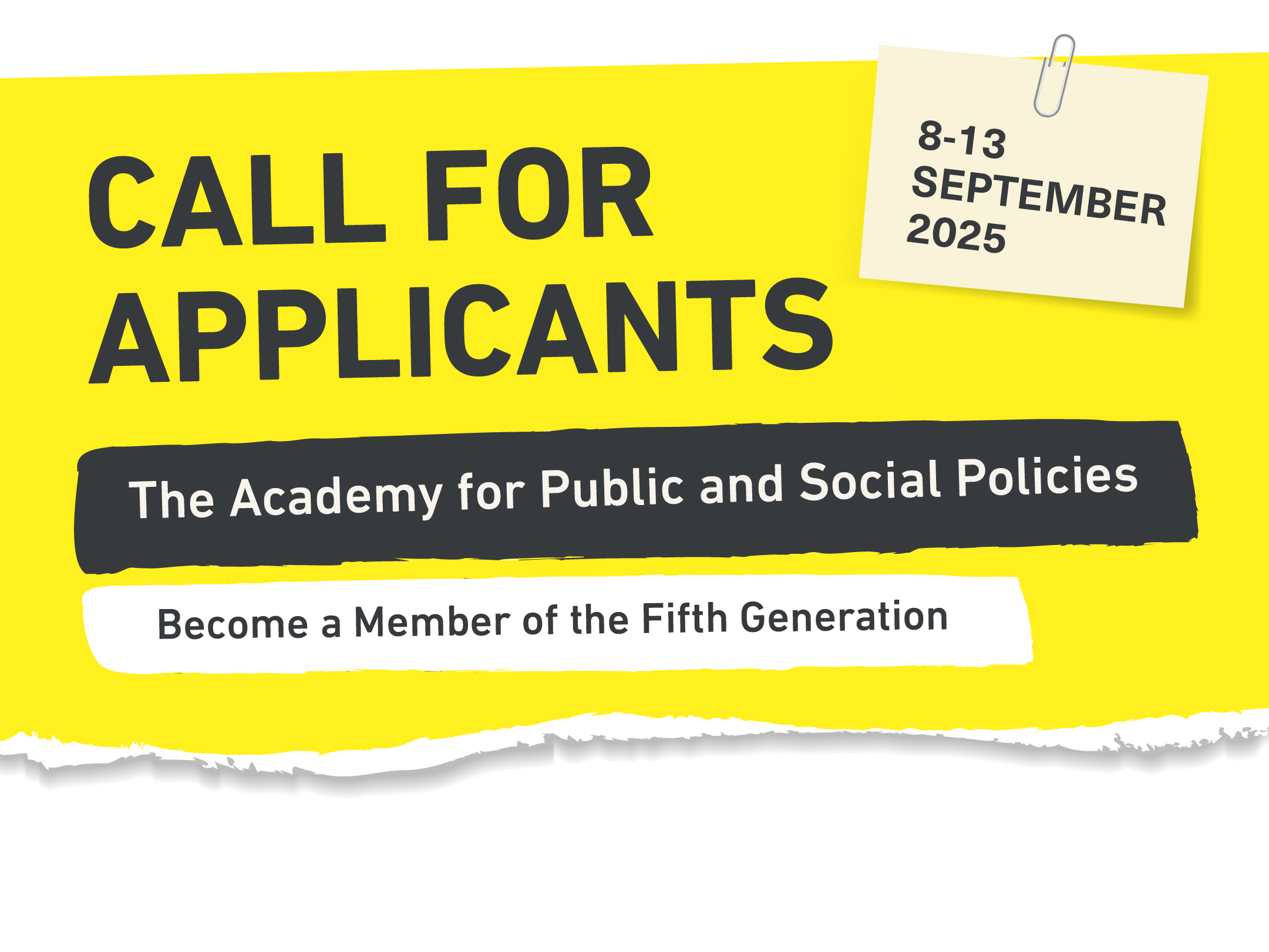
The Institute for Social Policy “Musine Kokalari” announces the call for applications for the fifth edition of the Academy for Public and Social Policy, which will be held from 8 to 13 September 2025.

During this intensive week, participants will have the opportunity to attend lectures and workshops with renowned lecturers, researchers and experts from Kosovo, the Western Balkans and the European Union.

Read More »

Informed Democracy: Promoting a Diverse and Sustainable Media Ecosystem

Kosovo’s media landscape is characterized by a large number of outlets and a limited advertising market. Despite the dense population, the media scene lacks genuine representation of diverse voices. Local outlets, in particular, face historical challenges, including limited strategic development compared to nationally focused media, which receive more frequent support from international donors. Additionally, local businesses are increasingly reluctant to advertise locally, preferring social media or national platforms. This results in more media outlets being licensed than the market can accommodate.
Local media navigate a generally disempowering environment, making them especially vulnerable to threats against financial and editorial independence. They are pressured to generate revenue through sensationalized, inaccurate content or by aligning with local power centers.
This issue extends beyond local media to Kosovo’s overall media environment. Editorial policies are driven by two predominant forces. First, commercialization pressures lead to an overemphasis on trivial and popular content. This results in short, scandal-oriented, personality-based news and misleading information wrapped in sensationalism. Second, political and economic power centers influence media through deliberate politically driven attacks and defamation. Fact-based, verified, contextualized information has become rare, while tabloidization and politicization have become the norm.
Local media, in particular, face size constraints that hinder the growth of human capital in marketing, business development, and project management. These constraints limit opportunities for investigative journalism and fail to meet the citizens’ demand for insightful local news. Factors such as low staff retention due to poor working conditions and limited strategic development contribute to a vicious cycle, fueling polarization, information disorder, and neglect of marginalized groups, including youth, women, and minorities. More broadly, these issues define Kosovo’s media environment as a whole.
Read More »

Newsletter: Musine Institute 2024!

As we reflect on 2024, the Musine Kokalari Institute remains committed to advancing social values and fostering a more just, equal, and inclusive society in Kosovo and the region. This newsletter aims to provide a brief overview of our key activities and accomplishments over the past year, highlighting our efforts to promote women’s and workers’ rights, strengthen civic capacities, and encourage regional cooperation.

Read More »

Marches

To underpin regular use of integrated economic and health modeling in impact assessments and socio-economic analysis by public authorities, the MARCHES project aims to advance methodological rigor and consistency in accounting for the welfare economic health costs of air pollution and drinking water nitrate, based on systematic reviews of health effects, and by extending the consensus on established approaches on premature mortality with disability-adjustment of the associated morbidity burdens, while developing European-wide exposure modeling for integrated assessment. Based on expert and stakeholder consultations, the project will provide guidelines and unit prices for an accounting approach that can be applied routinely by EU and national authorities, subject to data availability and policy scenarios. This will be demonstrated in case studies with public authorities in five Member States (CZ; DK; EE; ES; SE) and in one west Balkan country (XK).

Read More »

Dialogue, Solution, Future (DSF)

Dialogue, Solution, Future is a project that seeks to support the implementation of EU Proposal – Agreement on the path to normalisation between Kosovo and Serbia. It will aim to utilize partners’ existing ties with the international community representatives in Kosovo and individual expertise of our project staff to feed the dialogue facilitators relevant community concerns and needs that should be addressed to ensure smooth implementation of the existing EU proposal. The project aims to do so by replicating the objectives of the dialogue related to normalization to communities – Serbs and Albanians from Kosovo and Serbs and Albanians from Serbia, including the young activists of political parties. Project activates will cover a wide range of target groups – policy experts, dialogue facilitators, CSO representatives and students. The activities will include: policy level discussions on the dialogue related issues, a dialogue and regional cooperation related conference, mock negotiations and human dimension of improper implementation of agreements.

Read More »

Fostering Political Dialogue on Interethnic and Social Cohesion

The project aims to enhance democratic processes and empower marginalized communities in Kosovo, particularly focusing on youth and the Serb community. Through comprehensive surveys and focus groups, we will gather quantitative and qualitative data on perceptions regarding interethnic cooperation and coexistence. Conducting two semi-annual surveys and organizing four focus groups, the project will generate detailed reports highlighting key areas for policy intervention and community programs, accompanied by 20 infographics. These efforts aim to foster mutual understanding and collaboration among different ethnic groups, particularly youth, through two workshops on conflict resolution and two community dialogues.

Read More »

The Decent Work Academy for Western Balkans

The proposed Regional Academy for Decent Work in the Western Balkans is a collaborative initiative led by four key partners: the Institute for Social Policy Musine Kokalari (ISPMK) from Kosovo, the Centre for the Politics of Emancipation (CPE) from Serbia, ZORA-Association for social, cultural, and creative development from Bosnia & Herzegovina, and the Safety at Work Association of Montenegro (SWAM). Building on the existing Regional Coalition for Decent Work (www.decentworkbalkans.com), this partnership leverages a history of impactful activities, such as the successful “Decent Work in the Western Balkans” conference in Durrës, which gathered 20 CSOs from all six WB countries. Each partner brings unique expertise in labor rights, advocacy, and social policy, ensuring a robust regional approach. The Academy aims to advance fair labor practices, sustainable economic development, and improved working conditions, contributing to a just working environment throughout the Western Balkans, partially funded by the EU Fund for Balkans

Read More »

Kosovo-Serbia: Different Approach

The project aims at gauging the expectations Kosovo Serbs have from central public authorities and what future do young people want and need for Kosovo and the region.The impact of the project will be measured on the level of interest the findings incite on political level (roundtable discussion), the intensity of media coverage, the number of townhall meetings and participants in them, and the number of faculties that will accept Academic Exchange. 2023 is going to be a very important year in Kosovo-Serbia relations, and therefore in relations of Kosovo Serbs and Albanians, which makes our project of high interest not just in political but also societal level. This project also aims at increasing institutional language compliance and social acceptance of linguistic diversity in Kosovo is sustainable. Being that it is an ongoing initiative, this phase is carefully designed and calculated to be implemented within 9 months.

Read More »