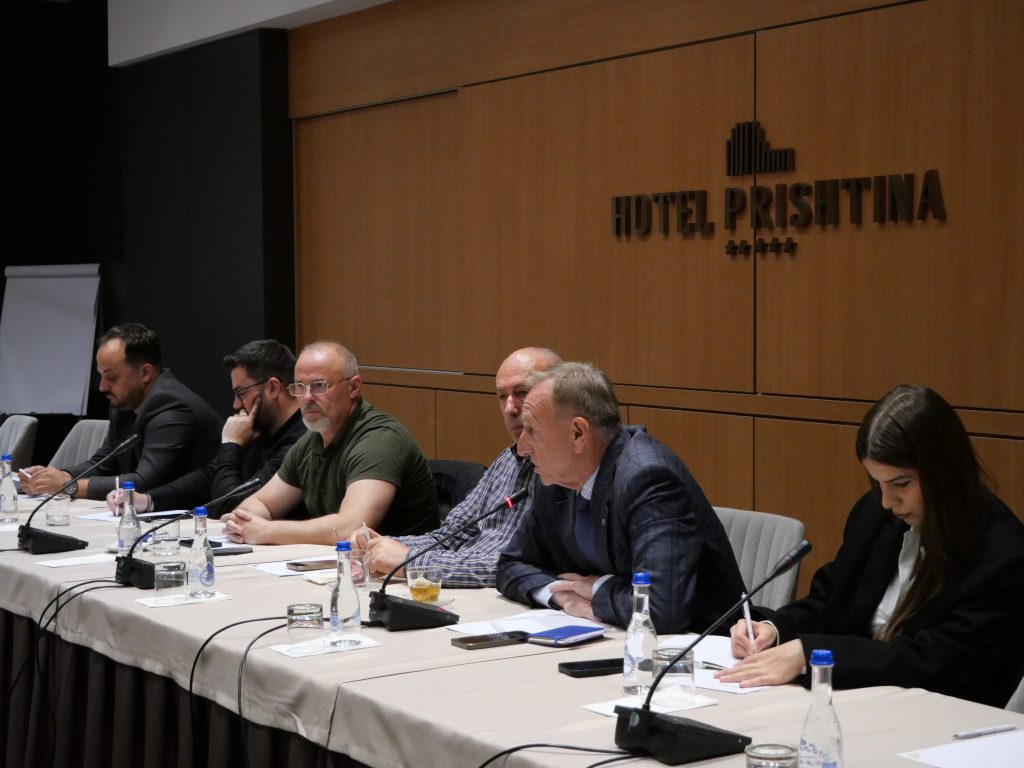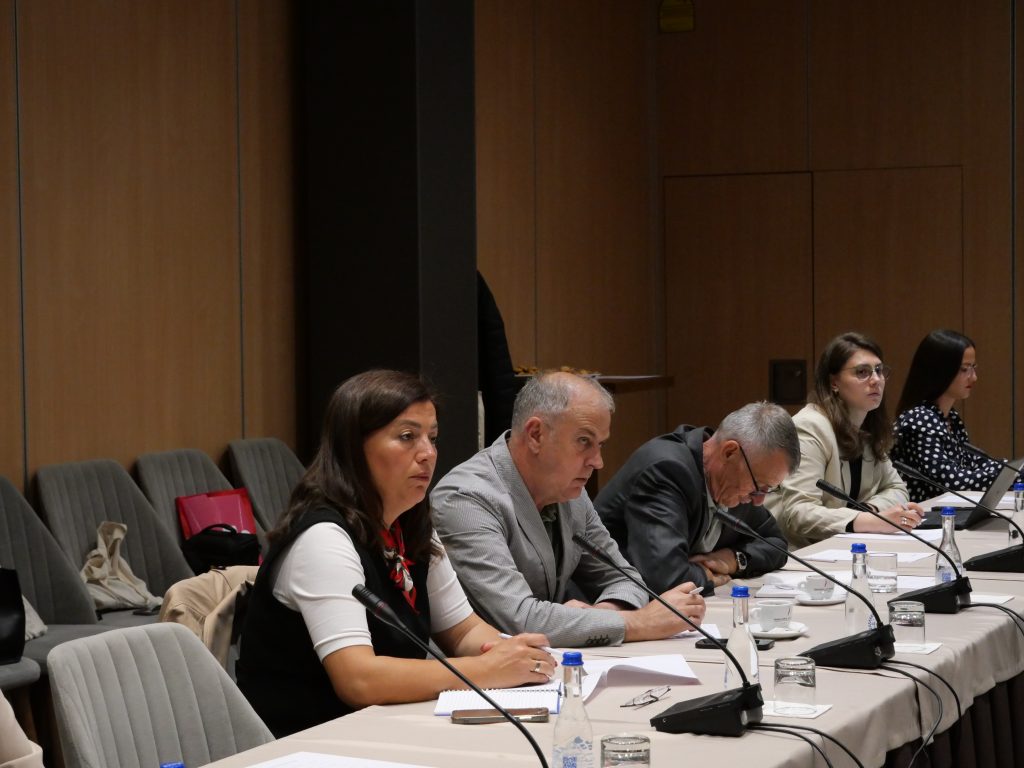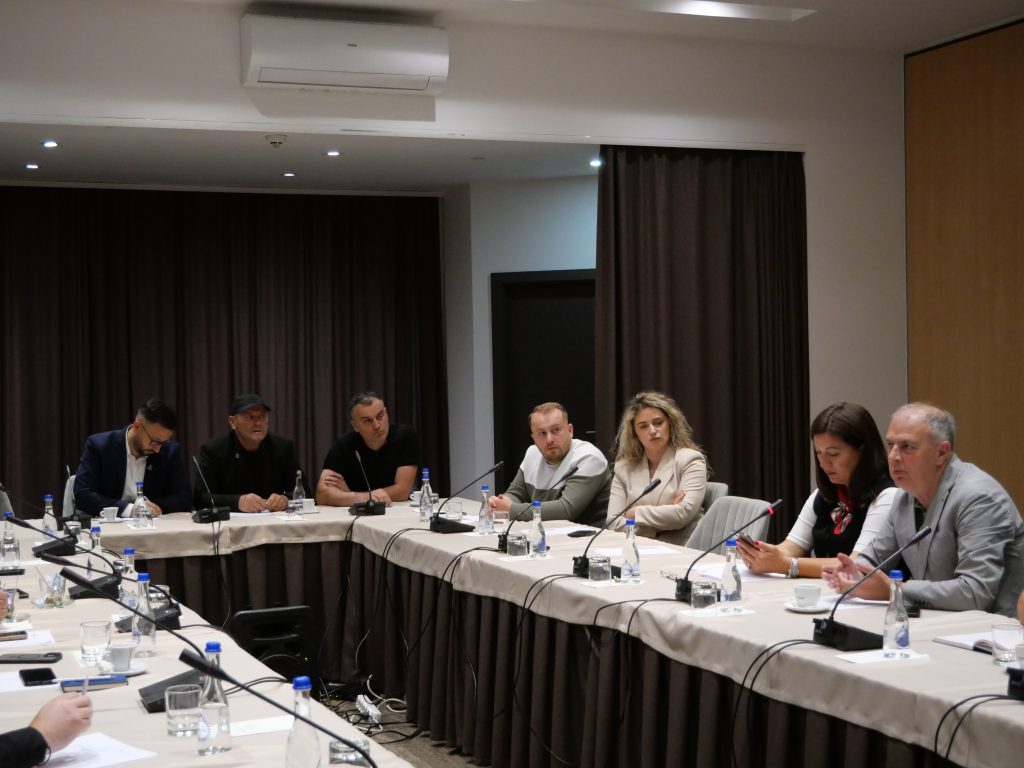

The Musine Kokalari Institute for Social Policy organized the meeting “Inclusive Social Dialogue,” with the participation of trade union representatives from various sectors in Kosovo. The meeting was moderated by the Institute’s Executive Director, Visar Ymeri, and aimed to establish a shared practical understanding of social dialogue, identify common trade union challenges, and create spaces for intersectoral cooperation.
Representatives from the Postal Workers’ Union, Private Sector Union, Trepça Union, Independent Union of the Kosovo Administration, SBAShK, Federation of Health Trade Unions, Airport Union, and the Federation of Independent Trade Unions – ElektroKosova participated in the meeting.
The discussion was organized around three main modules:
- • Social dialogue in practice: understanding, challenges, and trade union realities;
- • From sectoral challenges to common interests;
- • Support from the Musine Kokalari Institute and the upcoming training cycle.
During the discussions, trade union representatives raised numerous concerns regarding the current state of trade unionism in Kosovo, the lack of functionality of social dialogue, and the weakening of solidarity among unions. Participants emphasized that the lack of trade union unification is diminishing workers’ representative power and making it more difficult to address their demands before institutions and employers.
One of the key topics of discussion was the need to reform the legislation regulating labor relations, trade union organization, and the right to strike. Representatives assessed that the existing laws contain many ambiguities and do not reflect the current reality of workers and trade union organization in Kosovo. In particular, concerns were raised regarding the non-functionality of the Economic-Social Council, the lack of functional collective agreements, and the non-implementation of court decisions in favor of workers.
Participants also discussed the challenges of organizing young workers into unions, the pressures faced by trade union activists, the lack of effective legal protection for union representatives, and the consequences workers have faced due to participation in strikes or trade union activities. They called for greater cooperation among unions, joint public reactions, and mutual support in cases of protests, strikes, or violations of labor rights.
In conclusion, participants agreed that the next meeting should be held with a broader level of representation, including other relevant actors of social dialogue, with a focus on strengthening social dialogue and improving trade union coordination in Kosovo.
This activity is supported by the Kosovo Civil Society Foundation program “EJA Kosovo,” co-funded by the Swiss Agency for Development and Cooperation and Sweden.