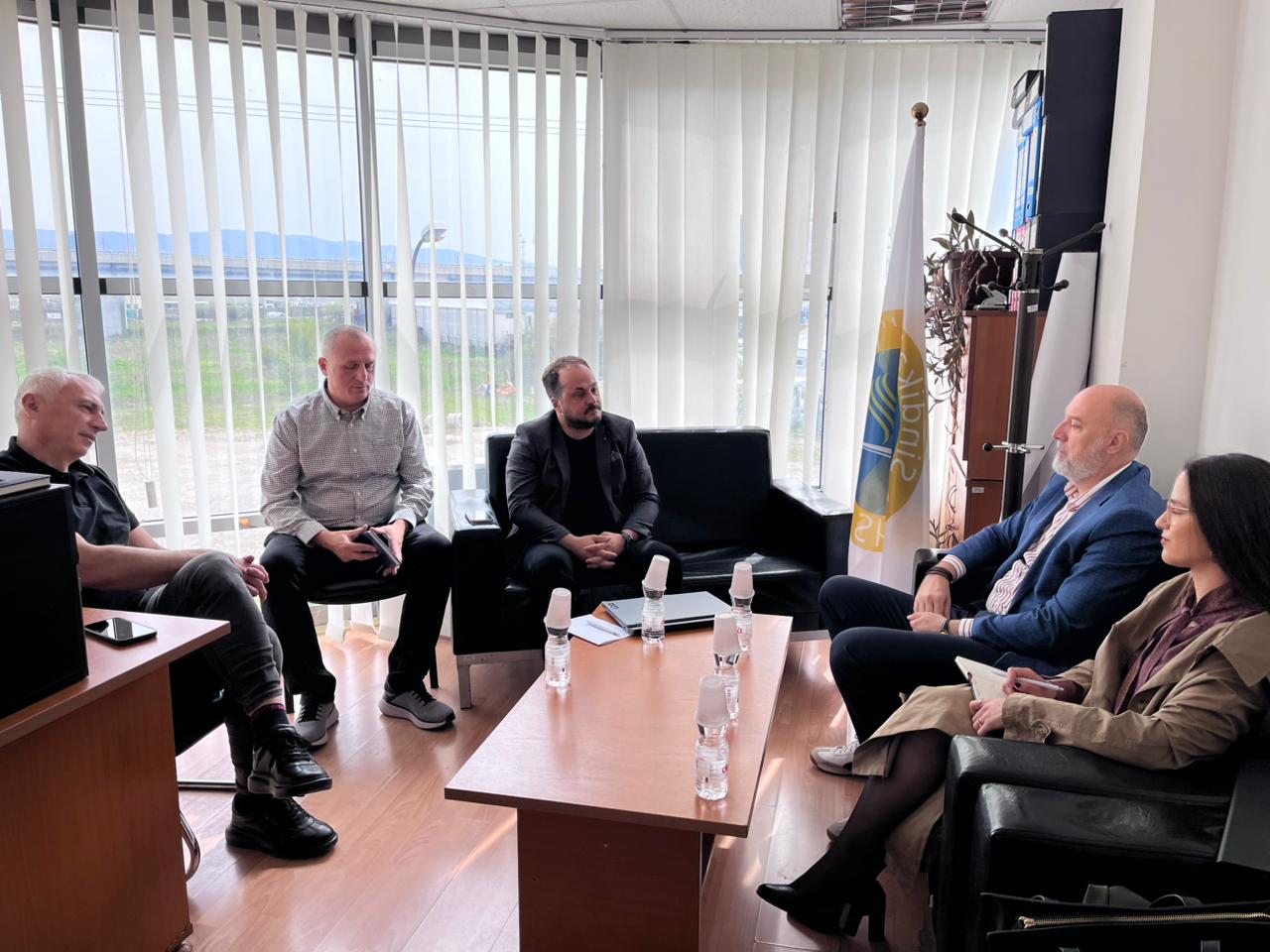
The Musine Kokalari Institute for Social Policy held a meeting last week with the Trade Union of the Post of Kosovo, where the main challenges faced by the union, relations with management, and the need to strengthen inter-union cooperation were discussed.
During the meeting, it was emphasized that the union has faced continuous challenges with management and the board, including numerous legal cases and issues addressed to the Labour Inspectorate during the period 2021–2024. It was noted that during this time the union faced various pressures, but also received support from colleagues and international trade unions.
The union is a member of CEST and cooperates with international trade union structures, which have contributed to increasing pressure for addressing issues within Kosovo’s institutions. It was also highlighted that communication with management has improved to the point where responses to official complaints are provided within three days.
The union represents around 80% of workers, with a membership contribution of 1% of their salary. Within the Post of Kosovo, there are also two other unions, which are currently inactive. The importance of inter-union cooperation at national and regional level was also emphasized.
Legally, the union is supported by two lawyers and two legal offices for its members. It was also underlined that the union is not part of BSPK.
Regarding working conditions, concerns were raised about low salaries, with post workers reportedly earning around 480 euros. However, the union stressed that it provides continuous care for workers, including transparency and the organization of various activities.
The approach of public institutions towards the union was also discussed, and was assessed as limited and often neglectful, along with difficulties in arranging meetings with executive management levels.
In conclusion, the main request highlighted was the strengthening of cooperation with other trade unions in Kosovo, as a necessary step towards increasing union power and more effectively addressing workers’ rights.
(This activity is supported by the Kosovo Civil Society Foundation (KCSF) program “EJA Kosovo”, co-funded by the Swiss Agency for Development and Cooperation (SDC) and Sweden.)