For years, North Mitrovica has been a space of complex political relations and numerous open issues.
By: Gordana Lazoviċ*
The public is most often focused on political processes, institutional solutions and relations between different communities. However, behind the political topics is the daily life of citizens who, regardless of their nationality, share many of the same concerns, needs and challenges.
When political issues dominate the public space, there is often less room to discuss issues that directly affect people’s quality of life. Citizens of North Mitrovica face issues of security, economic uncertainty, access to services, education, healthcare and the exercise of basic rights on a daily basis.
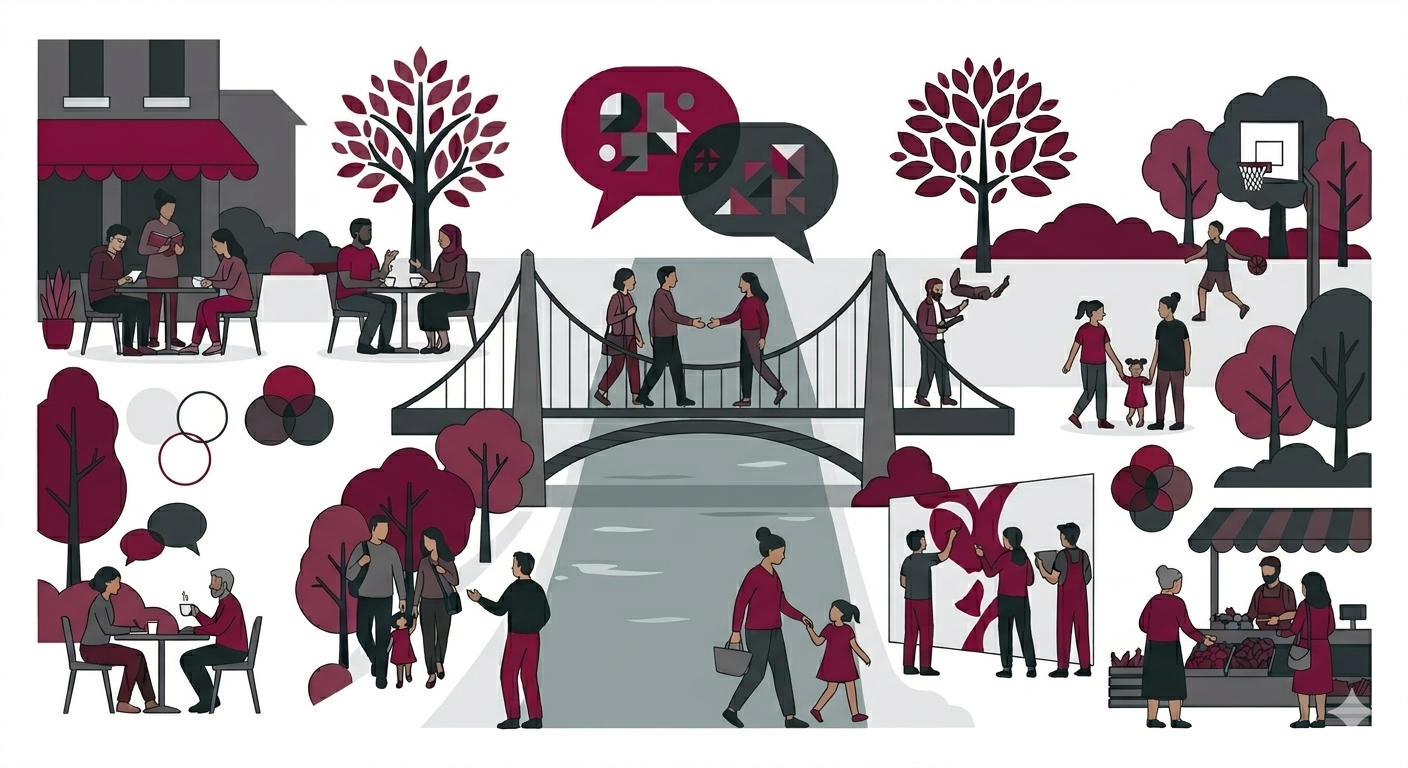
It is these questions that show that life circumstances often connect people more than they separate them.
Therefore, dialogue should not be seen exclusively as a political process reserved for high-level representatives of institutions and international actors.
Its greatest value is reflected in everyday communication between people and communities.
Dialogue implies a willingness to listen to the other party, to solve problems through conversation and to seek common solutions through institutions, rather than by imposing unilateral decisions. Where there is no dialogue, distrust grows, and the space to find sustainable solutions becomes narrower.
It is especially important to discuss issues that directly affect the daily lives of citizens. Infrastructure, water supply, employment, social care, education and freedom of movement are not political slogans, but topics that determine the quality of life of each individual.
One of the problems that is often highlighted is the issue of personal documents, diplomas and various administrative procedures. For many citizens, this is not just a bureaucratic obstacle, but a matter of exercising basic rights and being able to plan for their future normally.
Among members of Serbian community, of particular concern is the functioning of educational and health institutions. Many citizens fear that possible changes in the system could further complicate access to services they consider essential to everyday life. For them, education and healthcare are not only administrative issues, but the basis of community safety and survival.
Additional procedures, verifications and various administrative requirements often create a sense of uncertainty and confusion.
At the same time, there is an impression among citizens that their problems are insufficiently heard and that issues that directly affect their lives are often decided without their active participation.
Such a feeling further deepens distrust of institutions and makes it difficult to build more stable social relationships.
One of the most serious challenges facing North Mitrovica is the exodus of young people. Uncertainty, limited employment opportunities and a sense that the future is unpredictable encourage many to build a life and career outside their town. This issue doesn’t affect just one community. Regardless of language, identity or political views, young people share the same wishes – safety, quality education, employment opportunities and the opportunity to plan for the future in the environment in which they live.
That is why North Mitrovica can serve as an example of how often the needs of citizens of different communities are similar.
People want stability, a dignified life and institutions that will effectively solve their problems. These are universal needs that transcend political divisions and are the basis for building trust between communities.
Of course, political issues cannot and should not be ignored. They are important and often determine the broader framework of social relationships.
However, long-term stability is not built solely by political agreements. It is built through dialogue, daily cooperation and solving problems that affect ordinary people.
The impression from the field tells me that, despite numerous difficulties, there is still an awareness among citizens that the dialogue is the way forward. Dialogue is not a sign of weakness or giving up one’s own views. On the contrary, it represents the responsibility and willingness to resolve disagreements with arguments, not conflicts.
Without dialogue, there is no trust, and without trust, it is difficult to talk about peace and stability.
Perhaps this is the most important message of North Mitrovica. While politics often emphasizes differences, everyday life is persistently reminiscent of what binds citizens together. When attention is focused on people’s real problems and solving them, there is room for mutual understanding, cooperation and building a better future for all communities living in this city.
*Gordana Lazović graduated from the Higher Administrative and Legal School and is a longtime advocate of dialogue, mutual trust and cooperation among the citizens of Mitrovica.
(This op-ed was written as part of the project ‘Promoting Political Dialogue on Interethnic and Social Cohesion’, supported by the National Endowment for Democracy (NED)).