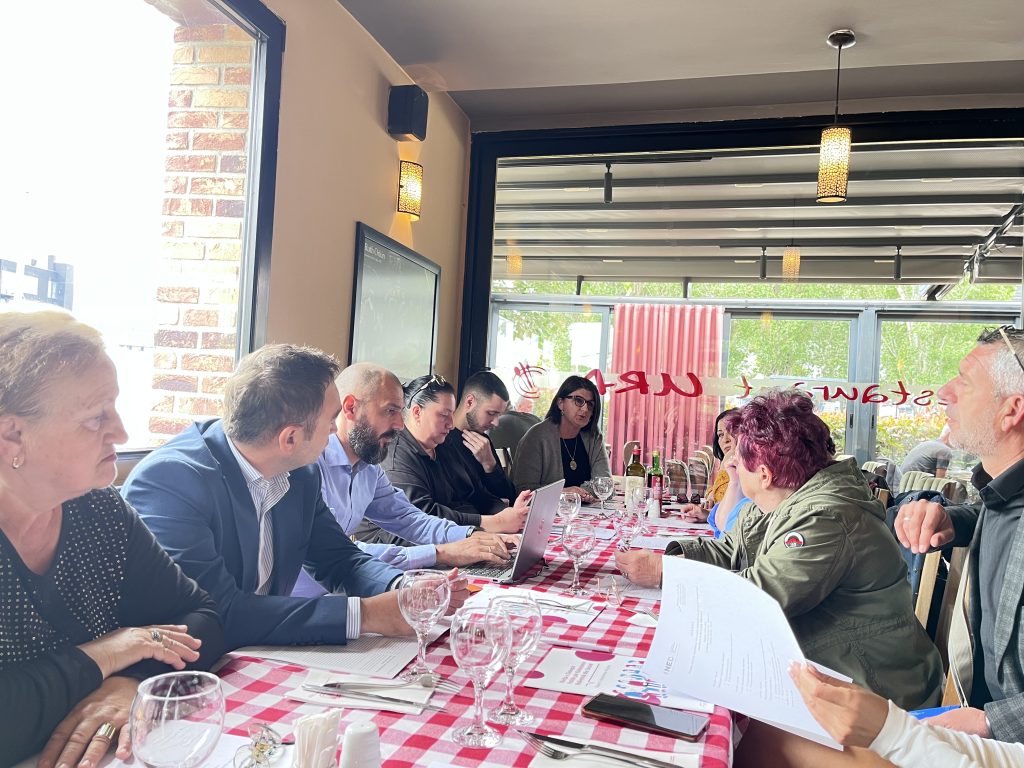
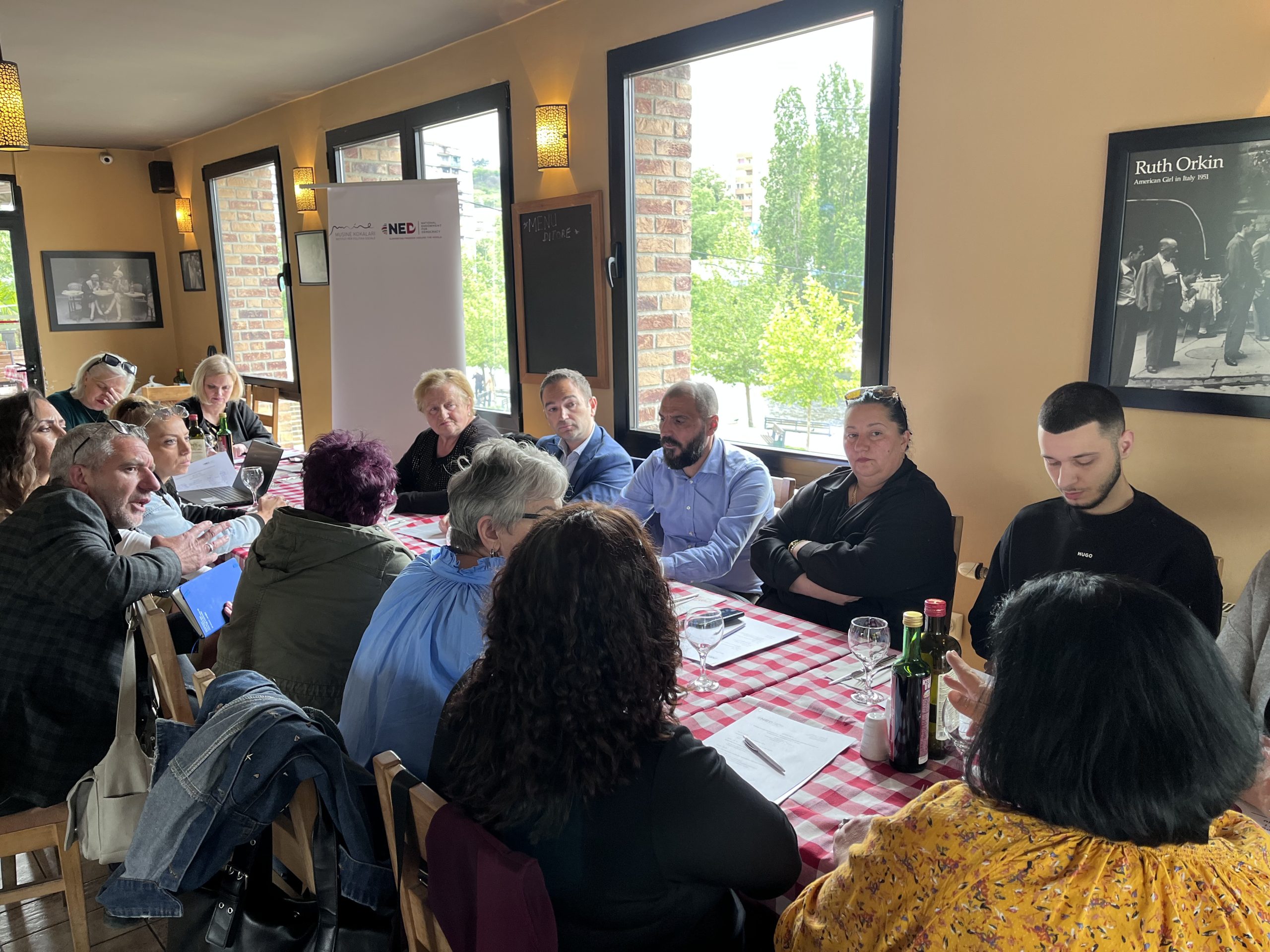
Political issues continue to generate tensions and deepen the divide between communities in North Mitrovica, while growing fatigue with political polarization is increasing the need to focus on citizens’ real-life concerns. This was one of the main conclusions of a dialogue organized by the Musine Kokalari Institute for Social Policy in North Mitrovica as part of its activities promoting intercommunity dialogue and coexistence. The event brought together representatives of the Albanian, Serbian, and Bosniak communities, including municipal assembly members, civil society representatives, private sector actors, local activists, and others.
During the discussion, participants addressed intercommunity relations, everyday challenges, and the future of the city. They emphasized that political issues and polarizing narratives continue to negatively affect efforts to bring communities closer together, while language barriers and the lack of communication remain significant challenges. Several participants from the Serbian community noted that engagement with the Albanian community is often perceived negatively within social or family circles, creating hesitation and additional pressure on intercommunity interactions.
Nevertheless, participants agreed that there are many shared interests and common needs among the communities, particularly in the social and economic spheres. They stressed the importance of shifting the focus toward concrete issues affecting citizens’ daily lives, such as employment, local development, education, and social well-being.
The future of young people emerged as one of the key topics of discussion. Participants expressed concern about the lack of job opportunities, limited prospects, and insufficient opportunities for professional development, factors that are contributing to increasing youth migration. It was highlighted that many young people continue to face unemployment and a lack of opportunities in the city even after completing their studies.
The discussion also addressed the lack of shared cultural and sports spaces, which could help bring communities closer together and create more opportunities for interaction among young people. Participants emphasized that cultural and sports activities, as well as local initiatives, can play an important role in building trust and strengthening communication between communities.
Participants called on local institutions to demonstrate greater commitment to economic development, activities for youth and women, and the creation of more opportunities for local initiatives and dialogue. They also highlighted the lack of vocational training courses and practical opportunities for skills development and economic empowerment.
This activity was implemented within the framework of the project “Promoting Political Dialogue on Interethnic and Social Cohesion”, with the support of the National Endowment for Democracy (NED).